

Circadian Rhythm Causes Metabolic Dysfunction in Fat Cells
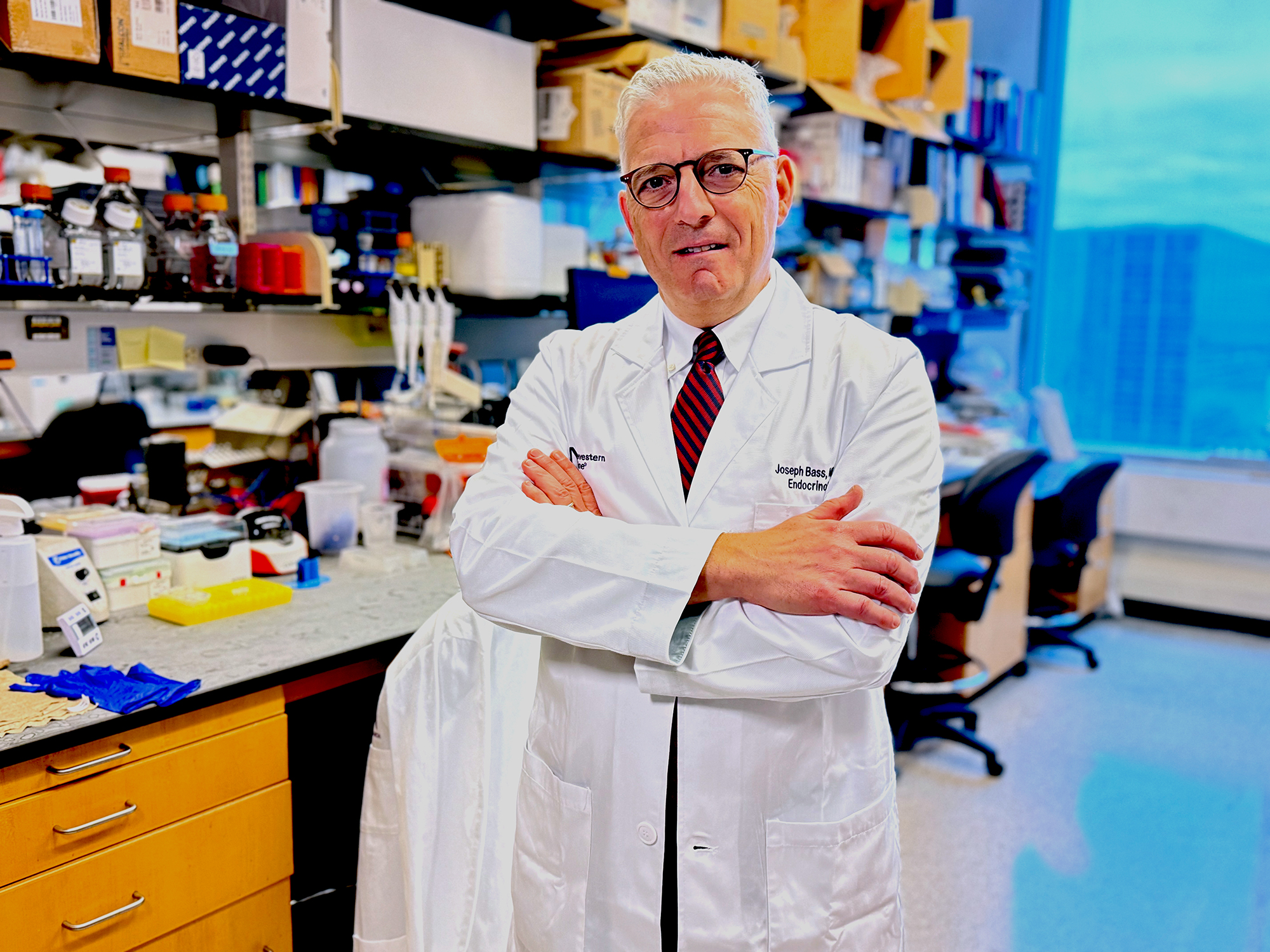
Northwestern Medicine scientists led by Joseph Bass, MD, PhD, the Charles F. Kettering Professor of Endocrinology and Metabolism and director of the Center for Diabetes and Metabolism, have discovered how disruptions in circadian rhythm impair metabolic function in fat cells, providing new insights into the molecular mechanisms that cause obesity and metabolic disease, according to a recent study published in Nature Metabolism.
“It’s not simply the accrual of excess fat that leads to disease. It’s a change in the actual function and the capacity of the energy center within the cell to work properly,” said Bass, who is also chief of Endocrinology, Metabolism and Molecular Medicine in the Department of Medicine and a member of the Robert H. Lurie Comprehensive Cancer Center of Northwestern University.
The circadian rhythm is the body’s own internal 24-hour clock that regulates the sleep-wake cycle, hormone levels and metabolism, among other systems throughout the body.
At the molecular level, circadian rhythm is regulated by a transcription-translation feedback loop, in which proteins including CLOCK and BMAL1 regulate the expression of myriad clock genes supporting proper circadian rhythm. These clocks are present in nearly every tissue and organ in the body, including adipose tissue.
Previous work led by Bass had shown that a high-fat diet can lead to disruption of circadian rhythm and that this disruption contributes to obesity, metabolic disease and even cancer. Precisely how the circadian clock regulates energy balance in cells and throughout the body, however, has remained unclear.
“The genes that program our [circadian] clock have been identified and can be manipulated to investigate how and where in the body clock mechanisms manifest, and how clocks within different organs synchronize our sleep-wake cycle with metabolism,” Bass said.
To determine how the circadian clock affects cellular metabolism, the scientists isolated mitochondria — the energy powerhouse of the cell — from adipocytes, which are fat tissue cells that store energy and regulate appetite and metabolism, in mice exposed to either normal or inverted light cycles.
Using multiple sequencing techniques, the scientists discovered that the circadian clock controls the mitochondria in adipocytes through regulating oxidative metabolism, a metabolic pathway in which cells use oxygen to break down and process nutrients to generate energy.
The scientists found that deleting the Bmal1 gene in a knockout mouse model, or by giving mice a high-fat diet, inhibited this molecular process in the adipocytes in part by suppressing peroxisome proliferator-activated receptor signaling and insulin signaling pathways, both of which help regulate cellular metabolism.
Next, the scientists generated mouse models containing enzymes from baker’s yeast expressing NADH dehydrogenase (NDI1), an enzyme that converts nicotinamide adenine dinucleotide (NAD) from its reduced form to its oxidized form (NAD+). Baker’s yeast is commonly used to study the production of NAD+, which is essential for the production of ATP, or energy for the cell.
To their surprise, the scientists discovered that adipocytes expressing yeast NDI1 prevented diet-induced and circadian-induced metabolic dysfunction independent of weight gain in the mice.
“It didn’t change the body weight; it just changed the chemical reaction balance in those cells so that they were now able to regenerate this NAD factor, which is necessary to enable energy to be turned over in the cell,” Bass said. “The clock system is affecting energy storage, but when the clock system is not working properly, energy storage gets jammed up and the basic energy mechanism in the cell is no longer producing energy in the way it should be.”
According to Bass, repairing this mitochondrial defect through targeted therapeutic strategies could help restore metabolic function without altering the amount of energy from fat stored in the body.
“Obesity is deleterious for health, not simply because of the accrual of excess energy, but because of the abnormalities in the way the energy handling system in the body works as this excess accumulates. If we can restore this energy defect, that would be therapeutic in theory,” Bass said.
Future directions for this work, Bass said, include investigating how the relationship between the circadian clock and mitochondrial function in fat cells impacts immune surveillance and inflammation. He said his team is also currently working on developing RNA-based therapies that can restore metabolic dysfunction in cells.
“We would like to have a better understanding of why it is that in obesity there’s an increase in inflammation and what that has to do with the changes in mitochondrial function that seem to be programmed by the clock,” Bass said.
Chelsea Hepler, PhD, a former postdoctoral fellow in the Bass laboratory and assistant professor of Molecular and Integrative Physiology at the University of Michigan Medical School, was lead author of the study.
Co-authors include Nathan Waldeck and Anneke Thorne, students in the Driskill Graduate Program in Life Sciences (DGP); Joseph Mastroni, a student in the Northwestern University Interdepartmental Neuroscience (NUIN) program; Colleen Reczek, PhD, research assistant professor of Medicine in the Division of Pulmonary and Critical Care; Kathryn Ramsey, PhD, research assistant professor of Medicine in the Division of Endocrinology, Metabolism and Molecular Medicine; Clara Peek, PhD, assistant professor of Biochemistry and Molecular Genetics and of Medicine in the Division of Endocrinology, Metabolism and Molecular Medicine; Grant Barish, MD, the Martha Leland Sherwin Professor of Medicine in the Division of Endocrinology; and Navdeep Chandel, PhD, the David W. Cugell, MD, Professor of Medicine in the Division of Pulmonary and Critical Care.
The study was supported by the National Institute of Diabetes and Digestive and Kidney Diseases grants R01DK108987, R01DK123358, F31DK130589, F30DK116481, F32DK122675, R01DK127800, R01DK090625, R01DK132647, R01DK142852, and P30DK020595; National Institute on Aging grants R01AG065988, P01AG011412 and P01AG049665; National Heart, Lung, and Blood Institute grants T32HL076139 and P01HL071643; Veterans Affairs grant I01BX004898; National Cancer Institute (NCI) grant R35CA197532; and the American Diabetes Association Pathway to Stop Diabetes award 1-24-INI-01.
Legal Disclaimer:
EIN Presswire provides this news content "as is" without warranty of any kind. We do not accept any responsibility or liability for the accuracy, content, images, videos, licenses, completeness, legality, or reliability of the information contained in this article. If you have any complaints or copyright issues related to this article, kindly contact the author above.
