

Federal IDEA Monitoring Report Highlights Due Process and Procedural Safeguards as a Compliance Priority
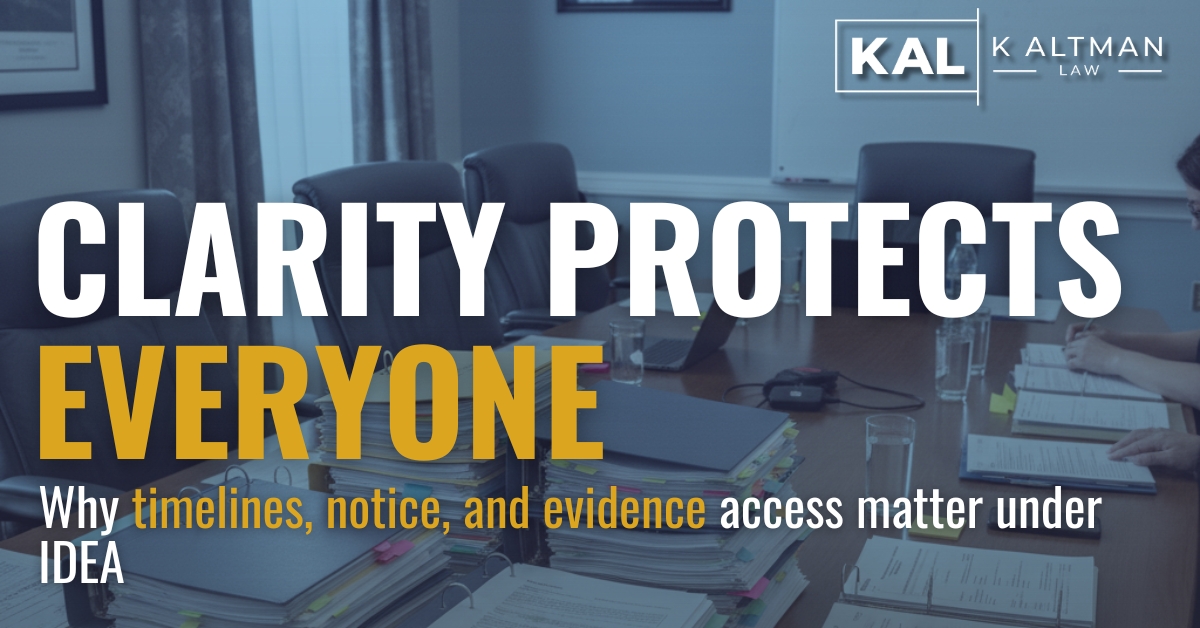
A federal IDEA monitoring report emphasizes that clear notice, timelines, and access to evidence are essential to meaningful due process.

Keith Altman
A federal IDEA monitoring report underscores that due process safeguards—notice, timelines, and evidence access—remain a top compliance priority.
What OSEP monitoring reports can tell us:
The Office of Special Education Programs (OSEP) periodically reviews state IDEA compliance through its Differentiated Monitoring and Support (DMS) process. These reports are a useful window into how dispute resolution systems are functioning in practice.
In a 2025 targeted monitoring report focused on due process procedures and safeguards, OSEP identified concerns about how certain expedited or emergent processes interact with IDEA hearing rights.
Why families should care about the procedure:
In IDEA disputes, procedure is substance: notice, timelines, access to evidence, and the opportunity to present your case are often decisive. When a state’s system creates confusion about rights, families can lose leverage even when the educational needs are clear.
For districts, procedural compliance reduces litigation risk and helps resolve disputes earlier, before they become entrenched.
Practical compliance lessons:
Ensure parents receive a complete procedural safeguards notice and understand which rights apply in any expedited track.
Treat evidence disclosure rules seriously; late evidence often becomes the flashpoint for contested hearings.
Track statutory timelines and document any lawful extensions, including the reason and the parties’ agreement when required.
“IDEA dispute systems only work when families can understand and exercise their rights. Transparency on timelines, evidence, and hearing procedures is not administrative overhead; it is the foundation of credibility.” — Keith Altman, Founder/Managing Partner
What families and students should do now:
• Ask for the procedural safeguards notice and confirm which dispute-resolution track is being used.
• Request a written schedule of deadlines (resolution session, mediation, hearing dates, disclosure cutoffs).
• Maintain a document log of evaluations, progress reports, communications, and service delivery records.
• If an expedited process is proposed, confirm what rights are preserved and what is different from a standard due process hearing.
Next step:
If you are entering a dispute-resolution process, invest early in clarity: timelines, evidence access, and the specific issues to be decided.
About K Altman Law:
K Altman Law is a national education law firm serving students, families, and educators in matters involving student discipline, special education (IEP/504), Title IX, and related civil rights issues. We help clients understand processes, preserve rights, and make informed decisions at critical moments.
Disclaimer:
This release is for general informational purposes only and is not legal advice. Outcomes depend on the specific facts and applicable law, which vary by jurisdiction. If you need advice about a specific matter, consult a qualified professional in your jurisdiction.
Keith Altman
K Altman Law
+1 888-984-1341
kalonline@kaltmanlaw.com
Visit us on social media:
LinkedIn
Instagram
Facebook
YouTube
TikTok
X
Legal Disclaimer:
EIN Presswire provides this news content "as is" without warranty of any kind. We do not accept any responsibility or liability for the accuracy, content, images, videos, licenses, completeness, legality, or reliability of the information contained in this article. If you have any complaints or copyright issues related to this article, kindly contact the author above.
